As Artificial Intelligence (AI) continues to transform all aspects of society, education has emerged as one of the sectors most profoundly affected. AI not only creates opportunities to innovate teaching and learning, personalize education, and enhance assessment practices, but also raises new challenges related to teachers’ digital competencies, the ethical use of AI, and the future direction of education in the digital era.
To provide an academic forum for sharing research findings and practical implementation experiences, as well as to foster collaboration among researchers, educational leaders, and teachers, Ho Chi Minh City University of Education organized the International Scientific Conference on “Artificial Intelligence in Education in Vietnam: From Research to Practice and Impact.” The conference brought together national and international experts, researchers, university lecturers, schoolteachers, and representatives of educational institutions.
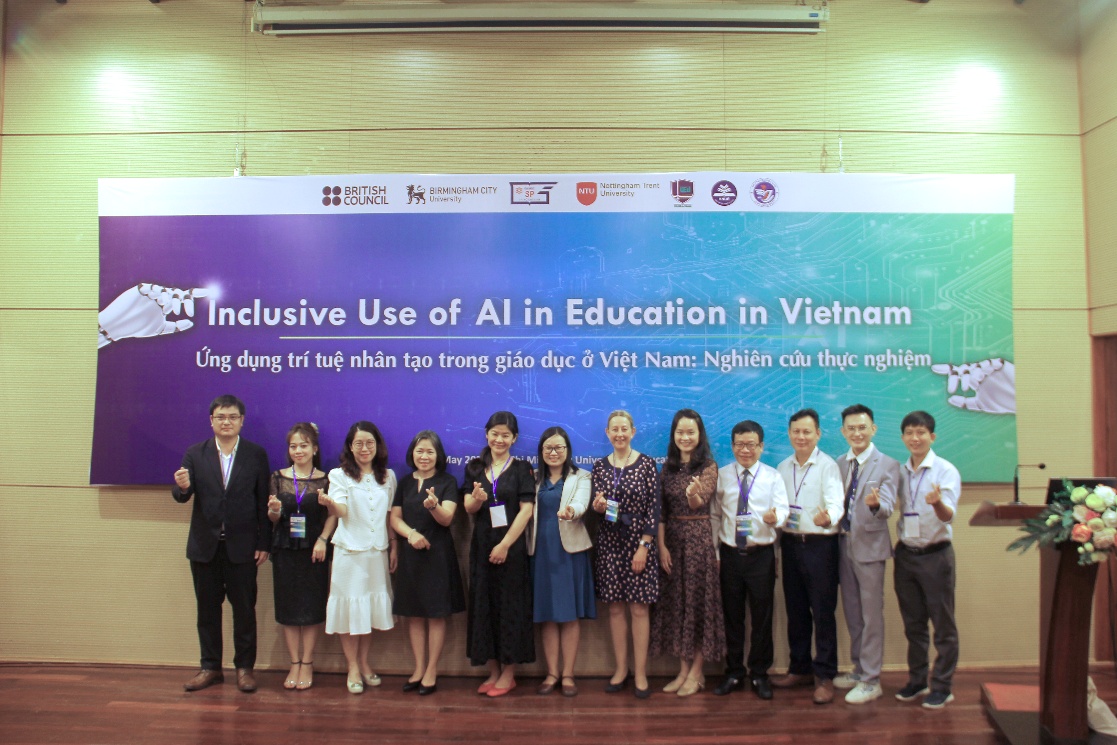
The seminar is an important activity within an international collaborative project involving UK universities, including Birmingham City University (BCU) and Nottingham Trent University (NTU), and Vietnamese partners, including Ho Chi Minh City University of Education, Hanoi National University of Education, the University of Education (Vietnam National University, Hanoi), and Vinh University. A highlight of the project is its teacher-centered approach, which focuses on examining pedagogical experiences, practical needs, and the diverse educational contexts found in Vietnam, particularly the disparities between rural and urban areas regarding the application of AI in teaching. Through this initiative, the project aims to formulate evidence-based recommendations to support the development of policies, teacher training curricula, and learning resources tailored to Vietnam's educational landscape.
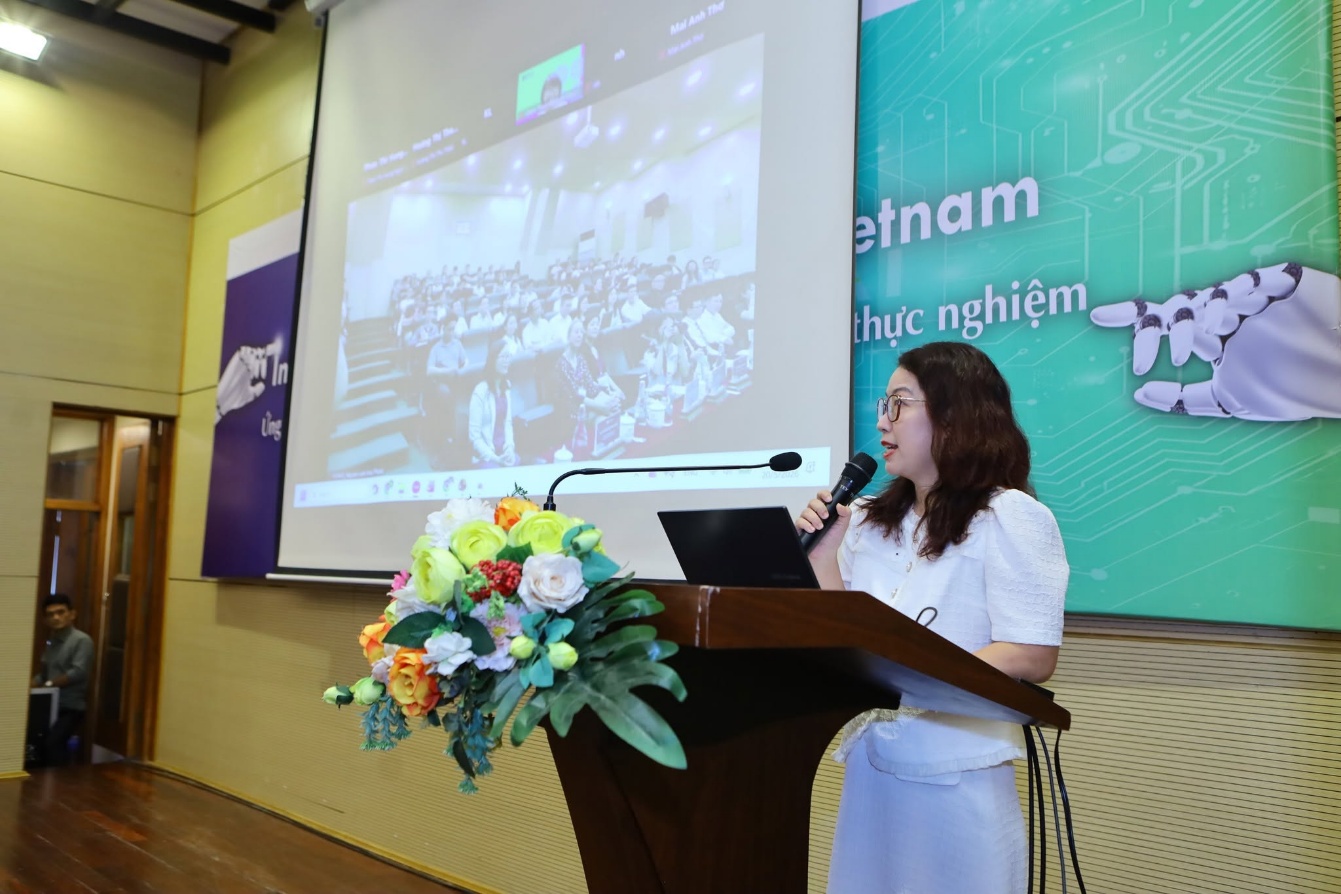
In her opening remarks, Dr. Bui Tran Quynh Ngoc, Vice Rector of Ho Chi Minh City University of Education, affirmed that AI is creating significant opportunities for educational innovation. She also emphasized the importance of practice-based research in supporting teachers to use AI effectively, responsibly, and in ways that are appropriate to their educational contexts (link). A representative of the British Council acknowledged the collaborative efforts between universities in Vietnam and the UK and highlighted the project's significance in advancing educational innovation through interdisciplinary research and international collaboration (link).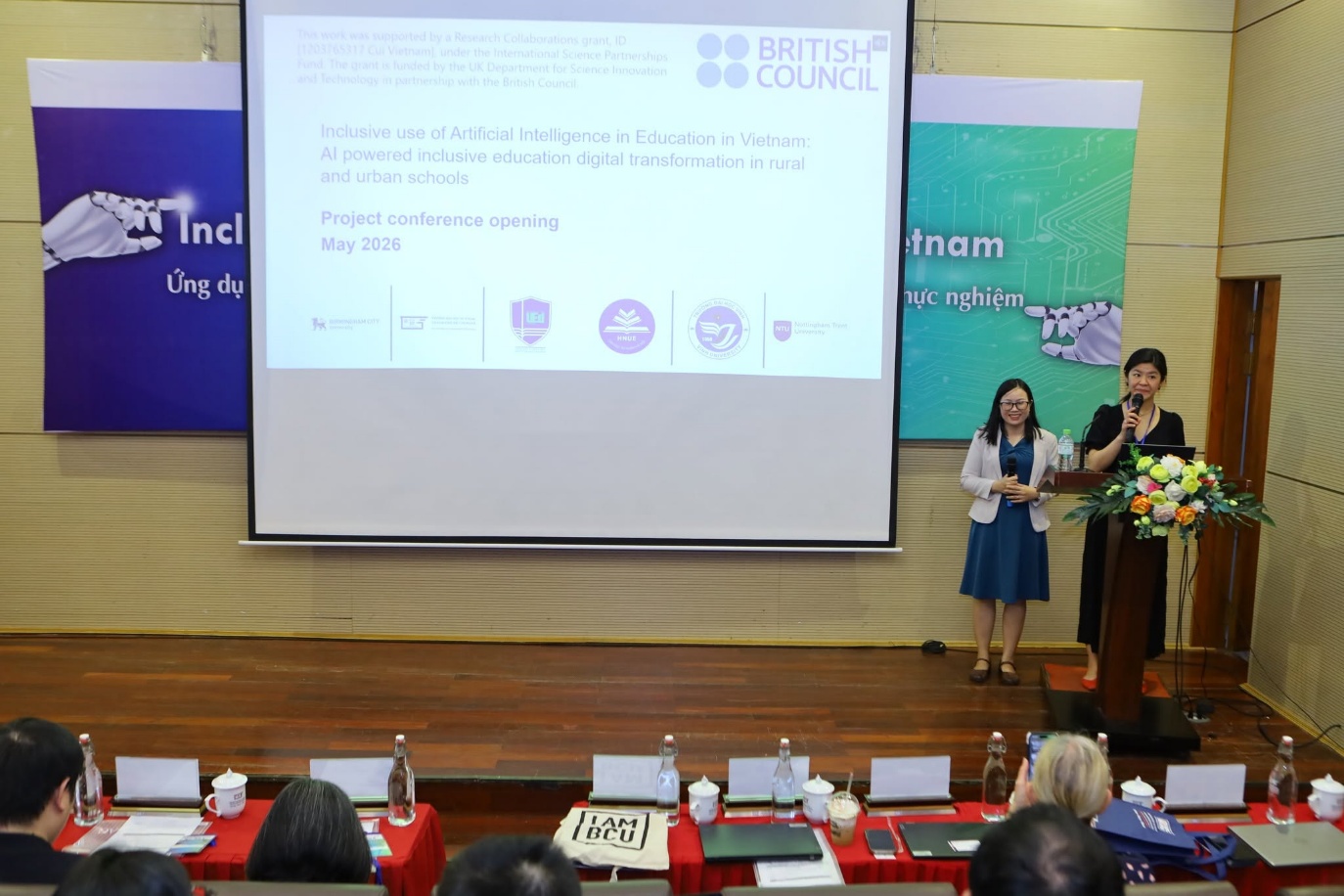
During the morning session, representatives of the research team, Dr. Vanessa Cui (Birmingham City University) and Dr. Nguyen Thi Thu Trang (Ho Chi Minh City University of Education), presented an overview of the project, including its theoretical framework and research design, and shared preliminary findings from the pilot study sites.
Representatives from the participating schools shared their practical experiences throughout the project implementation, including their use of AI tools, the organization of teaching and learning activities, and the positive changes in teachers’ awareness, confidence, and technological competence. These reflections from high school teachers provided valuable evidence of the feasibility and effectiveness of integrating AI into high school education in Vietnam. The findings also demonstrated that the project’s hybrid model, combining online and face-to-face engagement, strengthened professional collaboration between universities and schools, contributed to enhance teachers’ confidence, and enabled the timely resolution of practical challenges encountered in using AI for lesson planning and classroom teaching. Ultimately, this approach has yielded positive impacts on both teachers' professional practice and students' learning experiences.
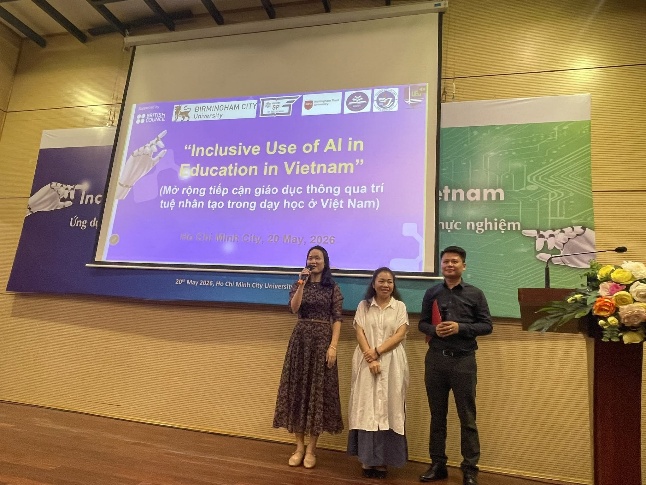
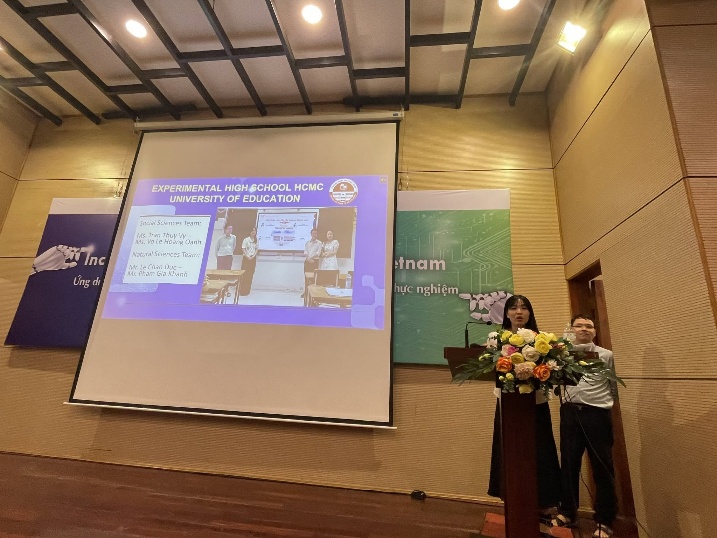
- Ho Chi Minh City University of Education Demonstration High School and Chau Phu High School (An Giang), with academic support from Ho Chi Minh City University of Education (link)
- High School for Educational Sciences and Phan Huy Chu High School (Hanoi), with academic support from the University of Education, Vietnam National University, Hanoi (link).
- Quy Chau High School and Que Phong High School (Nghe An), with academic support from Vinh University (link: video)
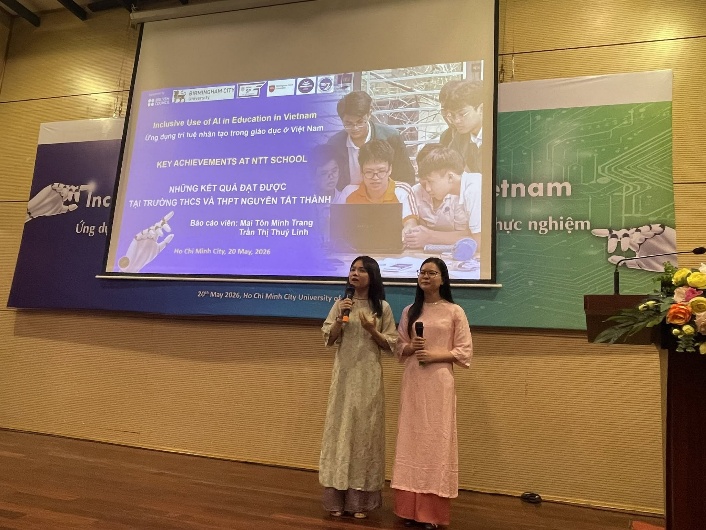
- Nguyen Tat Thanh Secondary and High School (Hanoi) and Yen Khanh A High School (Ninh Binh), with academic support from Hanoi National University of Education (link to slides).
The afternoon session of the conference featured an introduction to the learning materials and resources developed by the project, providing educational institutions and teachers with valuable references for integrating AI into teaching and learning. A key highlight of the session was a series of thematic presentations delivered by national and international experts. Dr. Do Duc Lan (Vietnam National Institute of Educational Sciences) presented a pilot content framework for AI education for high school students in Vietnam, offering valuable insights into the development of an AI curriculum tailored to the country's educational context.
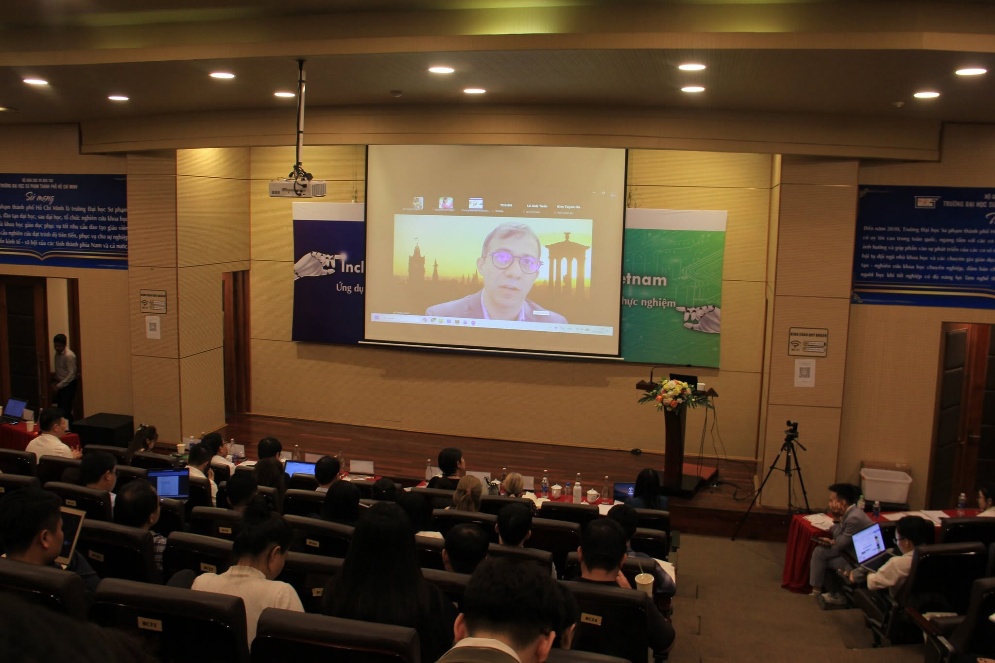
Subsequently, experts from Nottingham Trent University and the University of Edinburgh (UK) shared emerging trends in AI research in education, analyzed the opportunities and challenges that AI presents for teaching, learning, and assessment, and introduced resources to support teachers as well as AI-based solutions for students with special educational needs. These international perspectives provided valuable insights into teacher professional development as AI becomes an increasingly integral part of the modern educational landscape.
The panel discussion, titled “Integrating Artificial Intelligence into Teaching and Learning: Research, Practice, and Future Directions”, brought together researchers, education experts, university representatives, and high school teachers for a lively exchange of ideas. Participants discussed key topics, including the development of AI competency frameworks for teachers, digital learning resources, the ethical use of AI, teacher professional development, and strategies for strengthening collaboration between educational institutions and researchers to support the effective implementation of AI in schools.
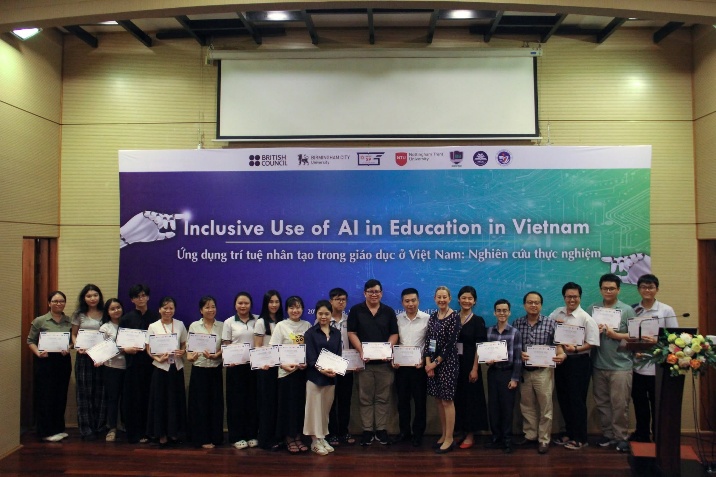
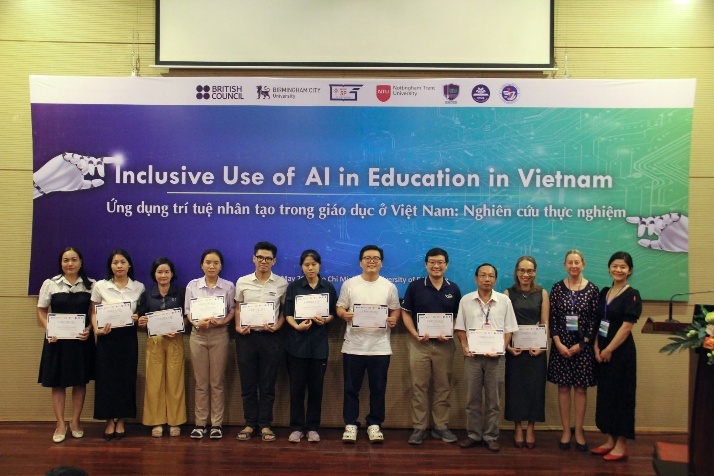
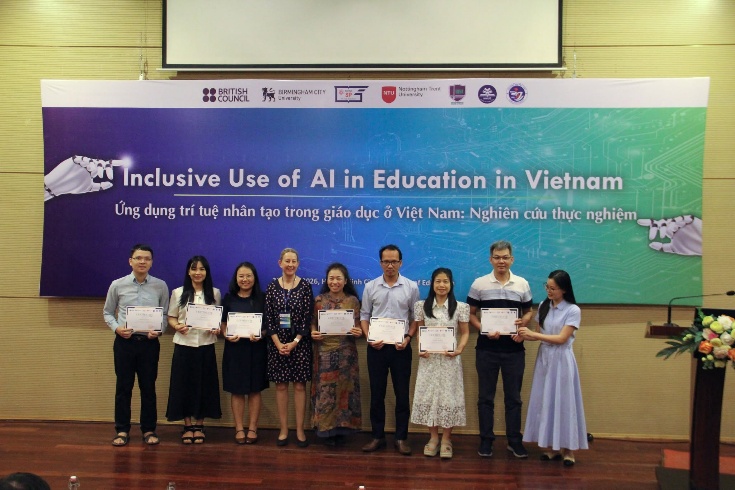
To conclude the conference, the Organizing Committee presented certificates of appreciation to the participating institutions and individuals in recognition of their contributions to the project. The pilot schools and teaching staff were acknowledged for their active engagement and valuable contributions throughout the research process. This closing ceremony not only celebrated the project's initial achievements but also reaffirmed the partners' commitment to expanding the collaborative network and further developing research initiatives and educational resources in the future.
The seminar affirmed the important role of international cooperation in advancing the research and application of artificial intelligence in education. It also fosters connections among scientists, policymakers, and educators to collaboratively develop solutions tailored to the Vietnamese educational context. The project’s outcomes provide a valuable evidence base for informing policy development and teacher training programs, while creating opportunities to develop effective, human-centered, and sustainable models for AI integration in schools.